
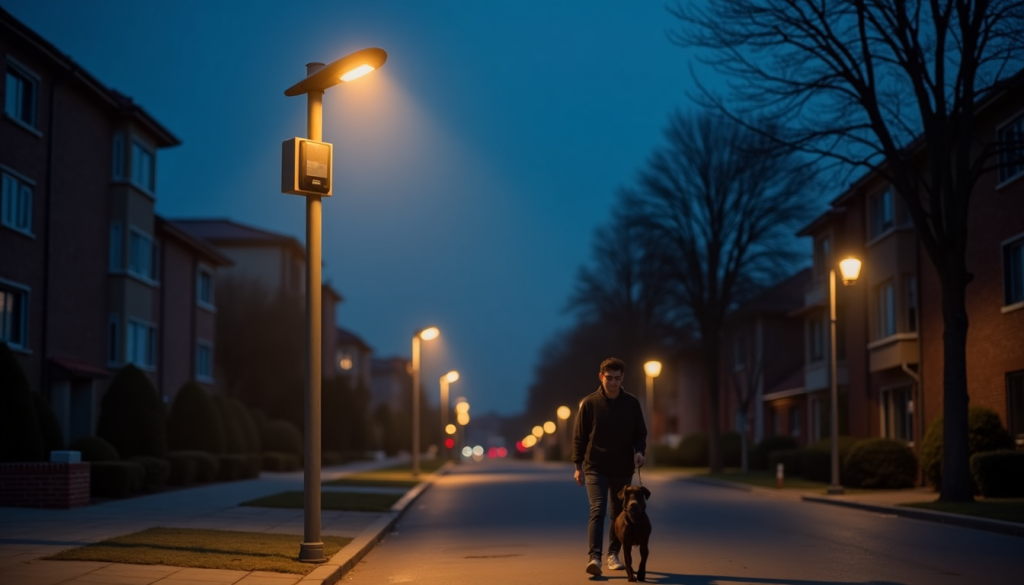
What if responsibility didn’t come from lectures, rules, or punishments—but from simply doing your job every single day, no matter who is watching? In R.J. Lamp Post: A Day in the Life, children are invited to see responsibility through an unexpected teacher: a neighborhood streetlight that never moves, never complains, and never abandons its post. R.J. Lamp Post does not choose his job for praise or attention. He stands where he is placed, night after night, lighting the way for others. Through his eyes, young readers learn that responsibility is not about being loud or important—it is about being dependable. From the very beginning of the story, R.J. introduces himself as someone who has inherited responsibility. His father, Pops, worked as a lamp post for nearly fifty years. When Pops retires, R.J. takes over. There is no sense of fear or reluctance. Instead, R.J. accepts the role as something meaningful. Pops reassures him that the job matters and that staying safe and healthy is part of doing it well. This moment quietly introduces children to the idea that responsibility is often passed down and that it deserves respect.
As R.J. settles into his role, readers begin to see how responsibility works in real life. R.J. does not control the neighborhood, but he watches over it. He stays alert through storms, darkness, and danger. When lightning strikes nearby poles, R.J. understands the risks of electricity and nature. He explains the difference between thunder and lightning in simple terms, helping children learn that understanding danger is part of being responsible. During the daytime, when R.J. is supposed to rest, he still faces interruptions. Birds perch on him, make messes, and treat him carelessly. Dogs stop and urinate on his pole. Flyers are taped to him and left behind. These moments may seem small, but they reflect an important lesson: responsibility often means dealing with inconvenience without giving up. R.J. does not react with anger. He observes, reflects, and continues doing his job.
One of the strongest lessons in responsibility appears through the children in the neighborhood. Bobby Crawford and his friends often swing on R.J.’s pole, climb it, and throw rocks at his light. R.J. understands they are children, but he also knows their actions are dangerous. He explains why throwing rocks can hurt people, break lights, and create unsafe situations. The story does not excuse their behavior, but it also does not label them as bad. Instead, it shows children learning through consequences, observation, and guidance. Responsibility becomes especially clear when R.J.’s light goes out for three months. Without light, the neighborhood becomes vulnerable. During this time, a home invasion occurs at Mrs. Murray’s house. R.J. feels responsible—not because he caused the crime, but because he could not do his job. When he manages to blink his light and scare the intruders away, readers see a powerful truth: responsibility means caring deeply about the impact you have on others, even when circumstances are beyond your control.
This moment is one of the most serious in the book, yet it is handled gently and appropriately for children. The lesson is clear without being frightening: when people neglect their responsibilities—like fixing a broken light—others can be harmed. When responsibilities are restored, safety returns. The very next day, workers repair R.J.’s light, reinforcing the idea that responsibility requires action, not just awareness. Throughout the night, R.J. continues to watch over people in different situations. He notices a young child running toward an ice cream truck, a teenager sneaking out late at night, a drunk man struggling to walk safely home, and neighbors gambling under his light. R.J. does not judge harshly. Instead, he worries, hopes, and prays for their safety. This shows children that responsibility includes compassion. Caring about others does not mean controlling them—it means wanting what is best for them.
Even when accidents happen, such as a bike crashing into R.J.’s pole, the lesson remains consistent. Protective gear, awareness, and caution prevent serious harm. Responsibility shows up in preparation and prevention, not just reaction. By the end of the story, R.J. reflects on his role with pride. He does not wish to be somewhere else, even though other lamp posts might have easier jobs. He understands that his position, right where he is, matters. He rests during the day, works at night, and welcomes Sundays as a time of peace and gratitude. For children, this story quietly teaches that responsibility is not about being the biggest or strongest. It is about showing up. It is about staying steady. It is about understanding how your actions—or lack of action—affect others. R.J. Lamp Post: A Day in the Life shows that responsibility can be learned through observation. A streetlight that never moves becomes a powerful example of what it means to care, to protect, and to do what is right—even when no one says thank you. Sometimes, the best lessons come from those who simply keep the light on.